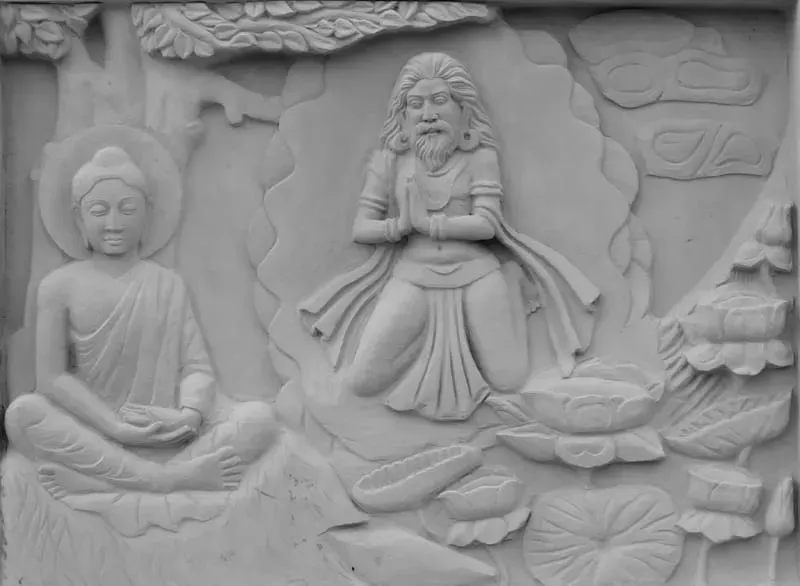
Ekaṁ samayaṁ bhagavā uruvelāyaṁ viharati najjā nerañjarāya tīre ajapālanigrodhe paṭhamābhisambuddho.
At one time, the |Blessed One::Sublime One, Fortunate One, epithet of the Buddha [bhagavā]| was dwelling at |Uruvelā::name of a town in Magadha, lit. broad banks [uruvelā]| on the bank of the river Nerañjarā at the foot of the goatherd’s banyan tree, having just attained full awakening.
Atha kho bhagavato rahogatassa paṭisallīnassa evaṁ cetaso parivitakko udapādi: “ekāyanvāyaṁ maggo sattānaṁ visuddhiyā sokaparidevānaṁ samatikkamāya dukkhadomanassānaṁ atthaṅgamāya ñāyassa adhigamāya nibbānassa sacchikiriyāya, yadidaṁ—cattāro satipaṭṭhānā.
Then, while the Blessed one was alone in |seclusion::solitude, privacy [paṭisallāna]|, a reflection arose in his mind thus: “This is the direct way, bhikkhus, for the purification of beings, for the overcoming of sorrow and lamentation, for the subsiding of |discomfort and distress::physical pain and mental suffering [dukkhadomanassa]|, for the attainment of the right path, for the realization of |Nibbāna::complete cooling, letting go of everything, deathless, freedom from calamity, the non-disintegrating; lit. blowing away [nibbāna]|, namely — the |four establishments of mindfulness::four foundations or objective domains of mindfulness that one gradually establishes and cultivates as a direct way of practice [cattāro + satipaṭṭhāna]|.
Katame cattāro? Kāye vā bhikkhu kāyānupassī vihareyya ātāpī sampajāno satimā, vineyya loke abhijjhādomanassaṁ; vedanāsu vā bhikkhu …pe… citte vā bhikkhu …pe… dhammesu vā bhikkhu dhammānupassī vihareyya ātāpī sampajāno satimā, vineyya loke abhijjhādomanassaṁ. Ekāyanvāyaṁ maggo sattānaṁ visuddhiyā sokaparidevānaṁ samatikkamāya dukkhadomanassānaṁ atthaṅgamāya ñāyassa adhigamāya nibbānassa sacchikiriyāya, yadidaṁ—cattāro satipaṭṭhānā”ti.
What four? Here, a bhikkhu dwells observing the body in and of itself, |with continuous effort::ardent, zealous, with energy, with application [ātāpī]|, |clearly aware::with attentiveness, with clear and full comprehension, intentional, deliberate, purposeful [sampajāna]| and being present, having removed |craving and distress::greediness and dissatisfaction, wanting and unhappiness, craving and aversion [abhijjhā + domanassa]| with regard to the world. Similarly, he dwells observing the |felt experience::pleasant, neutral, or painful sensation, feeling felt on contact through eye, ear, nose, tongue, body, mind; second of the five aggregates [vedanā]| in and of itself, the mind in and of itself, and |mental qualities::characteristics, traits, and tendencies of the mind, shaped by repeated actions and sustained attention, guided by particular ways of understanding; they may be wholesome or unwholesome, bright or dark [dhammā]| in and of themselves, with continuous effort, clearly aware and being present, having removed craving and distress with regard to the world. This is the direct way for the purification of beings, for the overcoming of sorrow and lamentation, for the subsiding of discomfort and distress, for the attainment of the right path, for the realization of Nibbāna, namely — the four establishments of mindfulness.”
Atha kho brahmā sahampati bhagavato cetasā cetoparivitakkamaññāya—seyyathāpi nāma balavā puriso samiñjitaṁ vā bāhaṁ pasāreyya, pasāritaṁ vā bāhaṁ samiñjeyya; evameva kho brahmaloke antarahito bhagavato purato pāturahosi. Atha kho brahmā sahampati ekaṁsaṁ uttarāsaṅgaṁ karitvā yena bhagavā tenañjaliṁ paṇāmetvā bhagavantaṁ etadavoca:
Then, |Brahmā Sahampati::name of the Brahma who inspired the Buddha to teach [sahampati]|, perceiving with his own mind the train of thought in the Blessed One’s mind, just as easily as a strong man might extend his flexed arm or flex his extended arm, disappeared from the Brahmā world and reappeared before the Blessed One. He draped his outer robe over one shoulder and raising his hands in reverence towards the Blessed One, said to him:
“evametaṁ, bhagavā, evametaṁ, sugata. Ekāyanvāyaṁ, bhante, maggo sattānaṁ visuddhiyā sokaparidevānaṁ samatikkamāya dukkhadomanassānaṁ atthaṅgamāya ñāyassa adhigamāya nibbānassa sacchikiriyāya, yadidaṁ—cattāro satipaṭṭhānā.
“So it is, Blessed One! So it is, Accomplished One! This is the direct way, venerable sir, for the purification of beings, for the overcoming of sorrow and lamentation, for the subsiding of discomfort and distress, for the attainment of the right path, for the realization of Nibbāna, namely — the four establishments of mindfulness.
Katame cattāro? Kāye vā, bhante, bhikkhu kāyānupassī vihareyya ātāpī sampajāno satimā, vineyya loke abhijjhādomanassaṁ; vedanāsu vā, bhante, bhikkhu …pe… citte vā, bhante, bhikkhu …pe… dhammesu vā, bhante, bhikkhu dhammānupassī vihareyya ātāpī sampajāno satimā, vineyya loke abhijjhādomanassaṁ. Ekāyanvāyaṁ, bhante, maggo sattānaṁ visuddhiyā sokaparidevānaṁ samatikkamāya dukkhadomanassānaṁ atthaṅgamāya ñāyassa adhigamāya nibbānassa sacchikiriyāya, yadidaṁ—cattāro satipaṭṭhānā”ti.
What four? Here, a bhikkhu dwells observing the body in and of itself, with continuous effort, clearly aware and being present, having removed craving and distress with regard to the world. Similarly, he dwells observing the felt experience in and of itself, the mind in and of itself, and mental qualities in and of themselves, with continuous effort, clearly aware and being present, having removed craving and distress with regard to the world. This is the direct way, venerable sir, for the purification of beings, for the overcoming of sorrow and lamentation, for the subsiding of discomfort and distress, for the attainment of the right path, for the realization of Nibbāna, namely — the four establishments of mindfulness.”
Idamavoca brahmā sahampati. Idaṁ vatvā athāparaṁ etadavoca:
This is what Brahmā Sahampati said. Having said this, he further said:
“Ekāyanaṁ jātikhayantadassī,
Maggaṁ pajānāti hitānukampī;
Etena maggena tariṁsu pubbe,
Tarissanti ye ca taranti oghan”ti.
“The one who sees the wearing away and ending of birth,
the compassionate one understands this direct path;
By which in the past they crossed the flood,
[in the future] they will cross, and at present they cross.”